


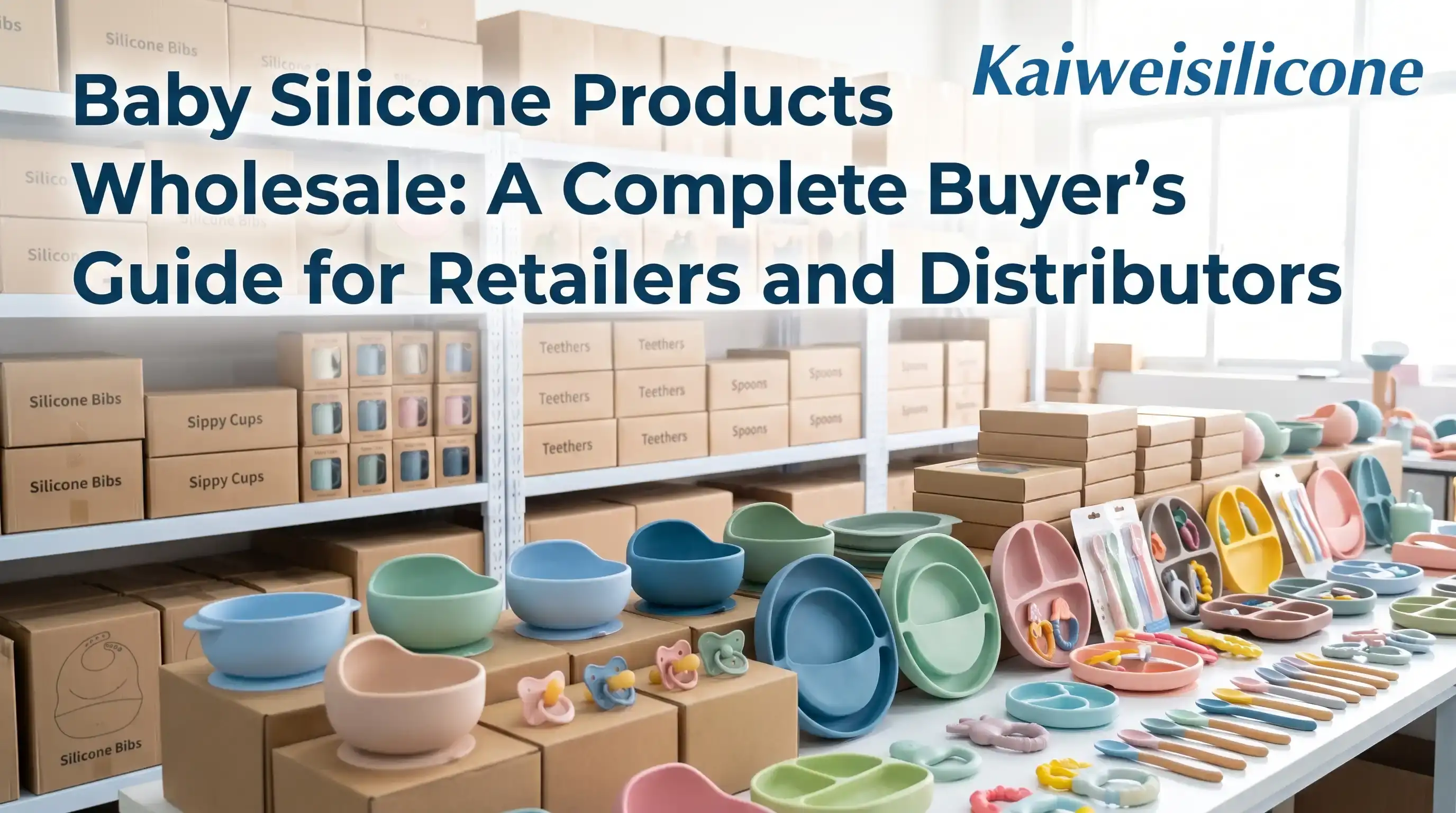
Kaiweisilicone is a silicone products manufacturer that helps retailers and distributors source safe, durable baby silicone products at wholesale. This guide explains which products to stock, how to check safety standards, how pricing and MOQ work, and how to choose a supplier you can trust for long-term orders.
Baby products are one of the more stable retail categories because parents keep buying through every stage of a child's first years. Silicone has become a preferred material in this space, and buyers who understand it well can negotiate better, avoid costly mistakes, and build a range that earns repeat orders.
Baby silicone products include feeding sets, bibs, teethers, and bottle accessories made from soft, flexible silicone. Wholesale buyers choose them because they are non-porous, heat-resistant, easy to clean, and long-lasting. These qualities lower return rates and help retailers build trust with parents who care about safe materials.
For distributors, the appeal goes beyond the material itself. Silicone baby products are light, unbreakable, and compact to ship, which keeps freight costs predictable. They also suit many price points, from simple teethers to full gift sets, so one supplier can support both budget shelves and premium boutique stores in the same order cycle.
Silicone is soft on gums, resists heat and stains, and does not absorb odors. It also survives repeated washing and sterilizing without cracking. For retailers, these benefits mean fewer complaints, better reviews, and products that stay attractive on the shelf and in daily use at home.
Another advantage is how well silicone handles daily routines. It can usually be washed by hand, placed in a dishwasher, or sterilized with boiling water, depending on the product design. Parents value this convenience, and retailers can highlight it in listings and packaging to support a clear, simple message that shoppers understand quickly.
Compared with plastic, silicone is more flexible and does not become brittle over time. Compared with bamboo, it is easier to sanitize and does not crack or hold moisture. This is why silicone often offers the best balance of safety, durability, and customer appeal for wholesale baby ranges.
Price is the one area where silicone costs more than basic plastic. However, longer product life and fewer returns often balance this out over time. Many retailers also find that parents are willing to pay extra for a material they see as gentle and safe, which supports healthier margins on silicone lines.
Choosing the right product mix is the first step in building a profitable baby range. The items below sell consistently across many markets, so retailers and distributors can start with proven categories and expand later based on customer demand and seasonal trends.
A good starting range usually mixes everyday essentials with a few giftable items. Essentials bring repeat customers, while gift sets lift the average order value around baby showers and holidays. Tracking which items move fastest in your first season helps you reorder smartly and avoid tying up cash in slow stock.
Feeding sets are the most popular wholesale category. They usually include a suction plate, bowl, spoon, and bib. Parents like them because they reduce mess and are easy to clean. Retailers like them because they sell well as gift sets and can be customized with different colors and packaging.
When choosing feeding sets, look closely at the suction base, the depth of the bowl, and the spoon shape. A strong suction base keeps the plate in place, while a soft spoon tip protects young gums. Small design details like these often decide whether a parent leaves a positive review or a return request.
Teethers and pacifier accessories are low-cost, high-turnover items that suit most retail stores. Silicone teethers are gentle on gums and simple to sanitize. Adding pacifier clips and holders to your order can raise the average basket value without needing much extra storage space.
Teethers also give retailers room to be creative. Shapes such as animals, fruits, and rings attract attention at the counter and work well as impulse buys. Make sure every teether has a safe, well-made structure, since small separate parts are not suitable for babies and can raise serious safety concerns.
Bibs and placemats are practical, repeat-purchase products with steady demand. Their wipe-clean surface and catch-all pocket design appeal to busy parents. Bottle accessories such as silicone nipples and sleeves complete the range, helping retailers offer a full set of baby essentials from one supplier.
Bibs deserve special attention because they are used daily. Adjustable closures help the bib fit a growing baby, and a deep pocket catches spills before they reach clothing. Offering several sizes and colors in one order lets stores serve different ages and match popular nursery themes without needing multiple suppliers.
Understanding where the market is heading helps you choose products that will still sell next year. Parents are more informed than before, and they compare materials, brands, and reviews online before buying. This section highlights the trends that matter most for wholesale buyers planning their next range.
Parents increasingly look for products that feel safe, last long, and create less waste. Silicone fits this mindset because it can be reused for years instead of being thrown away quickly. Retailers who explain these benefits clearly on packaging and product pages often see stronger interest from eco-minded and safety-focused shoppers.
Gift sets perform especially well around baby showers, birthdays, and year-end holidays. A set that combines a plate, spoon, bib, and teether in matching colors looks complete and saves the buyer time. Planning these sets early with your supplier lets you secure packaging and production slots before the busy season starts.
Many retailers now sell baby silicone products through online marketplaces and their own stores. Clean product photos, clear safety information, and consistent packaging help listings stand out. Ask your supplier whether they can provide product images, size details, and barcode-ready packaging, since these small extras make online selling much easier to manage.
Safety is the most important factor in baby product sourcing. Buyers must confirm that materials and finished products meet the rules of their target market. This section explains the main standards, material checks, and documents you should request before placing any wholesale order with a new supplier.
Many buyers focus on price first and safety second, but experienced importers do the opposite. A single failed test or customer complaint can damage your brand and lead to costly recalls. Checking safety documents at the start of the relationship is far cheaper than fixing problems after a large shipment has already arrived.
Food-grade silicone is made to be safe for contact with food and the mouth. A quality product should be BPA-free and free from fillers that can leak or leave a smell. Ask your supplier for material information so you can confirm what the product is made from before ordering.
Be careful with products that have a strong chemical smell or feel oily, because these can be signs of low grade material or poor curing. Good silicone feels smooth and clean, with little odor. Asking the factory about its curing process gives you extra confidence that the material was handled properly.
Different markets follow different rules. The US commonly refers to FDA requirements, while Europe often looks for LFGB or EU food contact compliance. Retailers should ask for test reports that match the country they sell in, since the right documents make customs clearance and marketplace approval much smoother.
It is also wise to confirm the age grading and labeling rules for your market. Some countries require specific warnings, batch codes, or manufacturer details on baby product packaging. Sharing your destination country with the supplier early lets the team prepare correct labels and documents, which saves time at customs.
Reliable manufacturers check quality at several stages, from raw material inspection to final packing. Batch testing helps confirm consistent color, texture, and safety. Buyers should ask how a supplier handles defects, so they know what to expect if a problem appears in a large wholesale shipment.
Ask whether the factory inspects products for flash, rough edges, color differences, and loose parts before packing. For larger orders, you can also arrange a third-party inspection before shipment. This small step gives you an independent report and helps you resolve any quality issues while the goods are still at the factory.
One common mistake is accepting a test report without checking that it matches the actual product. Reports should name the material, product type, and testing standard clearly. Another mistake is assuming that one certificate covers every item in the range, when each product category may need its own testing or documentation.
Many retailers want products that stand out from competitors. OEM, ODM, and private label services let you build your own baby brand without running a factory. Each option suits a different budget, timeline, and brand goal, so it helps to understand the differences before you start.
The main difference is who owns the design. With OEM, you provide the design and the factory produces it. With ODM, the factory offers ready designs that you can adjust and sell under your own name. Private label is usually the fastest route for new brands that want to enter the market with less development cost.
Customization is how a generic product becomes your brand. Buyers can usually choose Pantone colors, adjust shapes, and add embossed or printed logos. Clear artwork and color references at the start help the factory match your vision and avoid delays during sampling and approval.
Color choice deserves careful thought for baby products. Soft pastels and natural tones remain popular, while bold colors attract younger parents who prefer playful designs. Ask for physical color samples, since screen colors can look different from the final silicone, and approve a color card before mass production begins.
Packaging strongly affects how parents see a baby product. Gift boxes, window boxes, and eco-friendly packaging can make a feeding set look premium on the shelf. Discuss packaging size and materials early, because they also affect shipping cost and the number of units per carton.
Do not forget the details printed on the box. Product name, material information, care instructions, and your brand story all help a parent decide at a glance. Good packaging also protects the product during transport, which reduces damage and keeps your goods looking clean when they reach the shelf or the customer's door.
Understanding costs and timelines helps you plan inventory without surprises. This section breaks down what affects unit price, why minimum order quantities exist, and how long production usually takes, so you can compare suppliers on fair terms rather than only on the lowest quote.
Many first-time buyers ask for the lowest price immediately, but a better approach is to request a detailed quotation. A clear quote lists the material, size, color, packaging, and quantity for each item. This makes it easier to compare factories fairly and to spot hidden costs before you commit to a purchase order.
Unit price depends on silicone quality, product size, mold complexity, color count, and packaging. Larger orders usually lower the cost per piece. Buyers should compare quotes carefully, since a very low price can signal lower-grade materials that may not pass safety checks in your market.
Mold cost is another factor that buyers should understand. Custom shapes need new molds, and this one-time cost is often separate from the unit price. Some factories reduce or refund mold fees once an order reaches a certain quantity, so it is worth asking about this when you discuss your first project.
MOQ is the smallest order a factory accepts. Custom designs usually need higher MOQs because of mold and setup costs, while stock designs may allow smaller trial orders. New retailers can start with a small mixed order to test demand before committing to larger volumes.
If your budget is limited, ask whether the factory can mix several colors or items within one MOQ. Some suppliers allow this for stock designs, which helps small retailers test the market. Starting small also lets you gather customer feedback before you invest in custom molds, packaging, and larger inventory levels.
A typical order moves from sampling to approval, mass production, quality check, and shipping. Each stage takes time, so planning ahead matters, especially before peak seasons. Ask your supplier for a clear timeline and confirm shipping terms so your stock arrives when you need it.
Build a buffer into your schedule for the unexpected. Sample revisions, holiday closures, and shipping delays can all push the timeline. Most experienced buyers place orders well before peak sales periods such as back-to-school and year-end holidays, so they never miss an important selling window because of a late shipment.
When comparing quotes, make sure every supplier is quoting the same material, weight, size, and packaging. A lower price may simply mean thinner silicone, simpler packaging, or fewer quality checks. Create a simple comparison sheet that lists each point side by side, so you can judge value rather than only the headline price.
The right supplier protects your brand and your customers. This section gives retailers and distributors a simple way to evaluate manufacturers, covering factory capability, communication, and proof of experience, so you can build a stable partnership instead of repeating risky one-time purchases.
Reliable suppliers tend to share a few habits. They respond clearly, explain their process openly, and are happy to share documents and photos of their production. They also admit limits honestly, such as when a request is outside their capability, which is a better sign than a promise to do everything for any price.
A manufacturer controls production, quality, and pricing directly, while a trading company buys from factories and adds a margin. Direct factories often give better customization and clearer quality control. Ask about mold ownership, production lines, and factory visits to confirm who you are really dealing with.
A factory visit, either in person or by video call, can answer many questions quickly. You can see the production lines, the storage area, and the quality checking process. If a supplier avoids showing their workshop or answering simple questions about production, it is worth asking why before you send any deposit.
A few direct questions can reveal a lot about a supplier. Ask about materials, test reports, sample policy, MOQ, payment terms, and after-sales support. Clear, quick, and detailed answers usually show a professional team, while vague replies are a warning sign worth taking seriously.
Keep written records of everything you agree on, including specifications, tolerances, packaging, and delivery dates. A clear purchase agreement protects both sides and reduces misunderstandings. It also gives you something to refer back to if a problem appears, which makes any discussion about solutions much faster and more professional.
Once product and price are settled, the last step is agreeing how the goods will be paid for and delivered. Clear terms on payment, shipping method, and responsibility for freight prevent disputes later. This section explains the basics that most retailers and distributors need to understand before placing a first wholesale order.
Most factories ask for a deposit before production and the balance before or after shipment. The exact split varies by supplier and order size. New buyers should use secure payment methods and written agreements, and avoid paying the full amount upfront to a supplier they have not worked with before.
Incoterms such as FOB, CIF, and DDP define who pays for freight, insurance, and customs at each stage. FOB is common for buyers with their own freight forwarder, while DDP suits those who want a door to door price. Small orders may ship by air express, and larger ones by sea freight.
Prepare the commercial invoice, packing list, bill of lading, and any test reports your country requires. Your freight forwarder or customs broker can guide you on duties and import rules for baby products. Having documents ready before the cargo arrives helps avoid storage fees and delays at the port.
A clear process makes your first order less stressful and helps you avoid expensive errors. The steps below follow the path most successful buyers use, from early research to final delivery. You can adjust the order to suit your business, but each stage deserves proper attention before moving on.
Start by deciding which products you want and where you plan to sell them. Your target country affects safety standards, labeling, and packaging needs. Writing down quantities, preferred colors, and a rough budget gives suppliers the information they need to send accurate quotes instead of general replies.
Contact three to five suppliers with the same inquiry so you can compare replies fairly. Pay attention to how quickly and clearly each team responds. A professional supplier will ask useful questions about your market, quantity, and design needs rather than only sending a price list.
Order samples of the exact products you plan to buy. Check material feel, color accuracy, seams, suction strength, and packaging quality. If possible, test the samples in real use, such as washing and feeding trials, so you can spot weaknesses before committing to a larger order.
Once the sample is approved, confirm the price, MOQ, payment terms, delivery date, and shipping method in writing. Review the final specifications carefully, including colors and packaging. After the deposit is paid, production begins, so any changes should be agreed before this point to avoid extra cost.
Before shipment, check production photos or arrange an inspection to confirm quantity and quality. Then agree on the shipping method and prepare the import documents. When the goods arrive, check them against your order and keep records, which helps you plan reorders and give the supplier clear feedback.
Even experienced buyers can make costly errors when sourcing baby products. Most problems come from rushing, skipping checks, or relying only on price. Knowing the typical mistakes in advance helps you protect your budget, your customers, and the reputation of your brand.
A very low quote often hides trade-offs such as thinner material, weaker suction, or fewer inspections. Since baby products are used daily and often placed in a child's mouth, quality should come before savings. Always compare samples and documents, not only prices, before selecting a supplier.
Some buyers place large orders directly from photos, which can lead to surprises in color, size, or finish. Samples and pre-shipment checks are small costs compared with the cost of unsold or returned stock. A careful review at each stage keeps problems small and easier to solve.
Rules for baby products differ between countries, and what is acceptable in one market may not be in another. Confirm labeling, testing, and documentation requirements before production starts. This avoids delays at customs and prevents the expensive problem of finished goods that cannot be sold in your target country.
This section answers common questions from retailers and distributors in short, direct language. Each answer is kept clear so readers and AI search tools can quickly find the information they need about MOQ, safety, customization, and ordering, without reading the full guide.
MOQ depends on the product type and level of customization. Stock designs often allow smaller trial orders, while custom molds, colors, and packaging usually need higher quantities to cover setup costs. Contact Kaiweisilicone with your product list and target market, and the team can suggest an order size that fits your budget.
Silicone baby products are considered safe when they are made from food-grade, BPA-free silicone and tested for your target market. Safety depends on material quality and manufacturing control, so buyers should always request test reports and confirm that the product meets the standards required where it will be sold.
Yes. Most manufacturers offer OEM and ODM services, including custom logos, Pantone colors, shapes, and packaging. Embossed and printed logos are both common. Share your artwork and color references early, and the factory can prepare samples that match your brand before you approve bulk production.
Production time depends on order size, design complexity, and packaging. A typical order moves through sampling, approval, mass production, quality checks, and shipping. Custom molds add extra time at the start. Ask your supplier for a written timeline and confirm it before payment, especially ahead of busy retail seasons.
Sampling is a standard step in wholesale sourcing. Buyers can usually review stock samples to check material feel, finish, and color, or request custom samples after confirming artwork. Sample costs and shipping terms vary, so ask about the policy first and use samples to verify quality before committing to a bulk order.
Many factories request a deposit to start production and the remaining balance before shipment. The exact terms depend on order size and the relationship between buyer and supplier. Confirm the terms in writing, use secure payment methods, and ask your supplier to share the details clearly before you place the first order.
Often yes, especially for stock designs. Mixed orders let retailers test several products without committing to a large quantity of one item. Custom designs may need separate MOQs because each item needs its own mold. Share your full product list with the supplier so they can suggest the best way to combine items.
Ask for test reports that match your target market, such as FDA or LFGB related reports, along with material information from the manufacturer. Make sure the report names the product or material clearly and is recent. Your supplier can explain which documents are available and which can be prepared for your order.
Look for clear material documentation and test reports from the supplier. Physical signs also help, since quality silicone feels smooth, has little odor, and does not leave a greasy residue. Because simple home checks are not fully reliable, always rely on official test reports and a trusted manufacturer for confirmation.
Successful wholesale sourcing comes down to safe materials, the right product mix, clear pricing, and a dependable partner. Retailers and distributors who plan carefully can build a baby range that parents trust. Kaiweisilicone supports buyers with custom OEM and ODM solutions, so you can request a quote or sample today.
Before you contact suppliers, prepare a short list of your target products, estimated quantities, preferred colors, and destination market. Sending this information in your first inquiry saves time and shows that you are a serious buyer. Kaiweisilicone welcomes inquiries from retailers and distributors worldwide, and the team can help you choose products, prepare samples, and plan a smooth first order.
Introduction: W
READ FULL

Have a question or need a quote? Fill out this form and our team will get back to you quickly!