


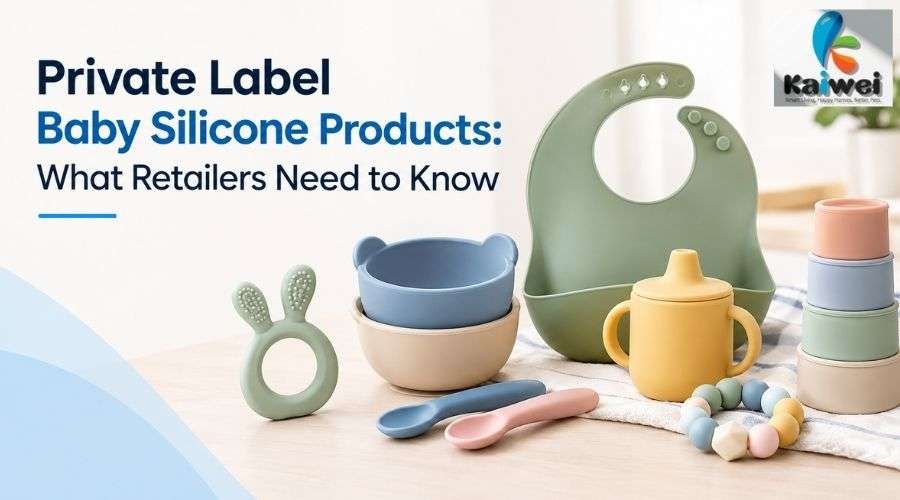
Private label baby silicone products offer retailers, wholesalers, importers, and distributors an opportunity to develop their own brands in the baby care market. Instead of selling only products from established brands, businesses can work with manufacturers to add their own logos, choose product colors, customize packaging, and create collections that match their target customers. However, launching a private label product line requires more than selecting attractive designs. Retailers must evaluate material quality, product safety, manufacturing capabilities, minimum order quantities, and total purchasing costs before placing bulk orders.
For businesses planning to enter this market, understanding the private labeling process can help reduce sourcing risks and support better purchasing decisions. From baby silicone feeding products to teethers and other accessories, each product category has different requirements that buyers should consider before making an investment. A reliable supplier should provide clear product specifications, relevant documentation, customization options, and consistent production support. By understanding these factors, retailers can make informed decisions and build a product range that fits their brand identity, budget, and long-term business objectives.
At kaiweisilicone, Private label baby silicone products are items manufactured by a supplier and sold under a retailer's or distributor's own brand name. These products may come from an existing manufacturer catalog, with the buyer selecting specific designs, colors, logos, and packaging. In other cases, retailers may request modifications to existing products or develop customized designs according to their business requirements. This approach allows businesses to establish their own product identity without necessarily building a manufacturing facility or managing the entire production process themselves.
For example, a retailer may purchase silicone baby bowls, feeding spoons, bibs, and cups from a manufacturer and sell them under a single brand. The products can feature coordinated colors and branded packaging to create a consistent collection. Before choosing this model, buyers should confirm which customization services the supplier offers, who owns any custom designs or molds, and what production conditions apply to future orders.
Read this blog: Baby Silicone Products Wholesale: A Complete Buyer's Guide for Retailers and Distributors
The private labeling process usually starts with product research and supplier selection. Retailers identify the products they want to sell, compare available manufacturers, and request quotations covering unit prices, minimum order quantities, customization, packaging, and production timelines. After selecting a suitable supplier, buyers may request samples to assess the product's appearance, dimensions, functionality, and finish before approving a commercial order.
Once the sample and specifications are approved, the retailer and manufacturer finalize branding requirements, packaging details, quality standards, and shipping arrangements. The supplier then produces the order according to the agreed specifications. Retailers should document these requirements clearly and arrange appropriate inspections before shipment. This process helps ensure that the delivered products match the approved samples and that branding, packaging, and product quality remain consistent throughout production.
Private label, white label, and original equipment manufacturer (OEM) arrangements can overlap, but they often describe different levels of customization. White label products are generally standardized items that several businesses can sell under their own branding. Private label arrangements may involve selecting specific products and customizing their branding, packaging, colors, or other available features. OEM arrangements often involve manufacturing products according to a buyer's specifications, which may include more extensive design or engineering requirements.
The exact meaning of these terms can vary between suppliers, so retailers should not rely on terminology alone. Instead, ask the manufacturer what can be customized, whether new molds are necessary, who owns the designs, and whether the product will be exclusive to your business. Understanding these details helps buyers choose an arrangement that matches their budget, launch schedule, and long-term brand strategy.
Retailers may choose private label baby silicone products to gain more control over their product range, branding, and market positioning. Selling under an independent brand allows businesses to create a consistent shopping experience across their website, marketplace listings, retail stores, and wholesale catalogs. Rather than competing only by reselling products available from many other businesses, retailers can develop a recognizable identity around their selected designs, product features, packaging, and customer service.
Read this blog: How to Source Baby Silicone Products: A Buyer's Guide for Retailers
Private labeling can also provide greater flexibility when planning a product collection. A retailer might begin with a small selection of silicone feeding accessories and later expand into complementary products after evaluating customer demand. However, a private label strategy does not automatically guarantee higher profits or stronger sales. Results depend on product quality, pricing, competition, marketing, customer satisfaction, and the ability to manage inventory efficiently.
Brand recognition develops when customers encounter a consistent identity across different products and shopping channels. Retailers can use coordinated colors, logos, packaging designs, product photography, and written product information to create a recognizable presentation. For example, a collection of silicone feeding bowls, spoons, and bibs can share similar packaging and visual elements while maintaining clear product descriptions and individual specifications.
Consistency is particularly important for businesses selling through eCommerce stores and online marketplaces, where customers may compare several similar products before purchasing. Clear branding can help customers identify the retailer's collection and understand what makes it different. However, branding should support rather than replace product quality. Retailers should make sure that all product claims are accurate and that the manufacturer's documentation supports any statements about material properties, safety, and intended use.
Private labeling gives retailers an opportunity to select products that fit their customer base instead of relying entirely on another brand's assortment. Buyers can compare product sizes, colors, styles, packaging options, and complementary items before deciding which products to introduce. They can also evaluate how the proposed range fits their current inventory, expected selling prices, and available purchasing budget.
Pricing decisions should consider more than the manufacturer's quoted unit price. Shipping, import duties, packaging, inspections, storage, marketing, platform fees, and fulfillment can all affect the final cost of selling a product. Retailers should calculate these expenses before setting retail or wholesale prices. Comparing the total cost with realistic market prices can help businesses determine whether a product is commercially suitable without relying on unrealistic margin expectations.
Choosing the right product categories is an important step when developing a private label baby product line. Retailers should compare customer needs, product functionality, supplier capabilities, regulatory requirements, and the level of competition within each category. Some businesses may prefer to begin with a small collection of feeding accessories, while others may focus on selected care products or coordinated gift sets. The best starting point depends on the retailer's target market, purchasing budget, and ability to manage product-specific quality requirements.
Before selecting products, buyers should review existing catalog options and determine which items can be customized without unnecessary development costs. It is also useful to compare dimensions, colors, packaging formats, cleaning instructions, and product compatibility. A focused collection with clearly defined purposes can be easier to manage than a large assortment of unrelated products, particularly when a business is entering the baby products market for the first time.
Baby silicone feeding products include bowls, plates, spoons, cups, bibs, and feeding sets. These items may appeal to retailers serving parents, baby specialty stores, online shoppers, and gift buyers. Businesses can explore coordinated product collections that use similar colors or packaging to create a consistent retail presentation. Before selecting a product, buyers should evaluate its intended age range, usability, construction, cleaning instructions, and suitability for its stated food contact purpose.
Feeding products require careful attention to material documentation and applicable food contact requirements. Retailers should request product-specific testing information and verify that the documents correspond to the actual product being purchased. They should also check whether the design contains detachable components, areas that are difficult to clean, or other features that require additional evaluation. These checks help buyers make informed decisions about which feeding products to include in their private label collections.
Silicone teethers and selected baby care accessories can provide additional options for retailers seeking to expand beyond feeding products. However, these products have their own design and safety considerations. Buyers should assess the product's intended use, age suitability, construction, attachment features, and cleaning instructions before approving a sample. Any product marketed for babies should be evaluated against the relevant safety requirements for its intended purpose and destination market.
Retailers should also avoid assuming that all silicone products have identical properties or safety requirements. A product designed for feeding may be subject to different considerations from a teether or another accessory. Ask suppliers for documentation that specifically covers the selected item, and verify that product claims are supported by suitable evidence. A clear product selection process helps businesses avoid choosing items based solely on appearance or low purchasing costs.
Retailers can sell baby silicone products individually or combine compatible items into coordinated sets. Individual products allow customers to purchase specific items according to their needs, while bundles can provide a convenient option for shoppers seeking several complementary accessories. For example, a feeding set might include a bowl, spoon, and bib, provided that each component is suitable for its intended use and the set is accurately described.
Before creating bundles, retailers should compare packaging costs, product compatibility, inventory requirements, and expected customer demand. A set may require different packaging dimensions and shipping arrangements from those needed for individual items. Buyers should also ensure that instructions, warnings, and product information remain clear for every component. Testing the demand for a limited number of products or bundles can help retailers make better decisions before committing to a larger order.
Selecting products according to customer needs can help retailers develop a more focused and manageable inventory. Businesses should first identify their primary customers, sales channels, target price range, and geographic markets. A retailer serving specialty baby stores may need a different assortment from an online seller competing on price and convenience. Understanding these differences helps buyers prioritize product features, packaging, and purchasing quantities that suit their business model.
Market research can include reviewing competitor listings, analyzing customer feedback, checking marketplace categories, and speaking with existing retail customers. Retailers should examine which product features are frequently discussed and where customers experience problems. However, competitor popularity does not guarantee that the same product will perform well for every business. Buyers should compare market evidence with their own sales capabilities, brand positioning, and available budget before selecting their initial product range.
Customer preferences can influence product design, packaging, and the type of information retailers should provide. Parents and caregivers may value convenient cleaning, practical storage, comfortable handling, and clearly explained product usage. Retailers should consider how these needs affect product selection instead of focusing only on color or appearance. Clear descriptions, accurate dimensions, and appropriate care instructions can also help customers understand what they are purchasing.
Businesses should use reliable customer feedback when deciding which features to prioritize. Product reviews, customer service questions, return reasons, and sales data may reveal recurring concerns about usability or expectations. Retailers can use this information to prepare a more relevant product assortment and communicate product characteristics more accurately. They should avoid making unsupported promises about safety, performance, or developmental benefits, particularly when selling products intended for infants and young children.
Ordering large quantities before validating demand can tie up cash flow and create unnecessary inventory pressure. Retailers should estimate potential sales by reviewing comparable products, search demand, competitor pricing, and their own audience data. Where practical, they can introduce a limited assortment or test customer interest before expanding into additional colors, sizes, and product categories.
Demand forecasting should also consider seasonal changes, promotional activity, shipping lead times, and the possibility that customer preferences may change. Businesses should calculate how much inventory they can store and how quickly they can reasonably sell it. A smaller initial order may have a higher unit price but can reduce exposure to unsold stock. Buyers should compare these tradeoffs instead of automatically selecting the largest available order quantity.
Material quality and product safety are essential considerations when sourcing private label baby silicone products. Retailers need to understand the product's intended use and obtain relevant evidence that its materials and construction meet the requirements of the destination market. A manufacturer's general statement about using high-quality silicone is not a substitute for product-specific documentation. Buyers should confirm material specifications, testing scope, manufacturing details, and any restrictions that apply to the finished item.
Requirements can vary according to product type, intended age group, and country of sale. Feeding products, teethers, and other baby accessories may be subject to different rules and testing expectations. Retailers should identify the applicable requirements before placing an order and verify documentation through appropriate channels when necessary. These checks should be part of supplier evaluation and product approval rather than being postponed until goods are ready for shipment.
Retailers should request written material specifications and clarify which material is used in each product component. Suppliers should be able to explain the product's composition, intended use, relevant material grade, and traceability arrangements where applicable. Buyers should also check whether any colorants, coatings, printed elements, or additional components require separate consideration. The material information should correspond to the actual product and not merely describe another item from the manufacturer's catalog.
Material claims should be supported by suitable documentation rather than broad marketing language. If a supplier describes a product as food grade, for example, the buyer should ask what standards or testing support that claim and whether the evidence covers the finished product. Retailers should retain approved specifications and supporting documents for future reference. This information can help them compare suppliers, investigate quality concerns, and confirm whether subsequent orders match the originally approved product.
Testing reports can help retailers assess whether a product has been evaluated against relevant safety or material requirements. Buyers should check the product name or model, sample identification, testing date, applicable standard, test results, and issuing laboratory details. They should also determine whether the report covers the exact product configuration being purchased, including relevant materials, colors, and components. A document for a similar item may not demonstrate compliance for a different product.
Applicable requirements depend on the destination market and intended product use. Food contact rules may apply to feeding accessories, while children's product safety and chemical restrictions may apply where relevant. Retailers should verify which requirements apply to each product and whether additional testing, labeling, or documentation is necessary. They should not assume that a single certificate guarantees compliance in every country or covers every item in a manufacturer's product range.
Product design should be evaluated alongside material documentation. Retailers should examine the sample for sharp edges, loose components, structural weaknesses, inconsistent finishes, and features that could create choking or other physical hazards. Products intended for babies require particular attention to age suitability, construction, and the possibility of components separating during normal use. Where applicable, buyers should arrange testing by a qualified laboratory rather than relying solely on a visual inspection.
Cleaning and maintenance instructions also deserve attention. Products should have clear information explaining their intended use, cleaning methods, and any restrictions identified by the manufacturer. Retailers should verify that these instructions are consistent with product testing and relevant requirements. Before approving mass production, businesses should document acceptance criteria and establish a process for handling defects or failed inspections. This helps ensure that product quality remains a defined purchasing requirement rather than a subjective judgment.
Customization allows retailers to develop products that reflect their brand identity and target market. Depending on the manufacturer's capabilities, options may include logo placement, selected colors, packaging design, product dimensions, and modifications to existing designs. Some changes are relatively simple, while others may require new molds, additional sampling, or engineering work. Buyers should clarify which options are available for standard products and which require extra investment before committing to a product development plan.
A successful customization project begins with clear specifications. Retailers should provide the correct logo files, color references, packaging requirements, and any relevant product drawings. The supplier should confirm feasibility, additional costs, and expected timelines before production begins. Businesses should also clarify ownership rights for custom designs, artwork, and molds. Written approvals reduce the risk of misunderstandings and make it easier to reproduce the same specifications when placing repeat orders.
Branding options depend on the product's shape, material, available surface area, and manufacturing method. Retailers may be able to select from existing colors or request specific colors subject to production limitations and minimum quantities. Logo placement should be considered carefully so that branding does not interfere with product functionality, cleaning, required information, or applicable safety requirements. The chosen branding method should also be suitable for the product's expected conditions of use.
Before approving a design, retailers should review a physical sample or an appropriate production proof. They should check logo clarity, color consistency, placement, finish, and any differences between the approved design and the final sample. If custom molds or substantial design changes are required, buyers should discuss development charges, ownership, maintenance, and future production rights. These details can affect both the initial investment and the long-term flexibility of the product line.
Packaging helps retailers communicate brand identity and provide essential product information. Options may include branded boxes, printed sleeves, labels, instruction cards, and retail-ready packaging. Buyers should consider how packaging will appear on store shelves, in product photographs, and during delivery to customers. Packaging dimensions and materials can also influence shipping costs, storage requirements, and the amount of space products occupy in a warehouse.
Retailers should ensure that packaging information is accurate and appropriate for the destination market. This may include product identification, care instructions, warnings, traceability information, and required language or labeling details. Any claims about material properties or product performance should be supported by suitable evidence. Before approving bulk production, the retailer should check the final artwork, spelling, barcode information, and packaging dimensions to avoid expensive corrections after manufacturing has begun.
Finding a reliable manufacturer involves more than comparing prices or browsing product catalogs. Retailers should assess a supplier's relevant manufacturing experience, product range, customization capabilities, documentation, quality control procedures, and communication practices. A supplier may offer attractive prices but lack the testing records or production controls required for a particular product. Buyers should therefore establish clear selection criteria and compare potential manufacturers against the same requirements.
Businesses can begin by requesting product catalogs, quotations, material specifications, sample policies, and details about the manufacturing process. They should ask how the supplier handles quality problems, production delays, and changes in product specifications. Where appropriate, retailers can conduct supplier audits or use independent inspection services to obtain additional assurance. The goal is to establish a working relationship based on documented expectations, transparent costs, and consistent product quality.
Relevant manufacturing experience can help buyers understand whether a supplier is equipped to produce their selected products. Retailers should ask about the manufacturer's experience with silicone feeding products, teethers, or other specific items under consideration. They should also review the available production processes, customization options, quality management practices, and ability to support the anticipated order volume. General experience with silicone materials does not automatically demonstrate expertise in every baby product category.
Buyers should request evidence that supports important supplier claims. Depending on the project, this may include product specifications, testing reports, quality control records, and details about production facilities. Retailers should also clarify whether the supplier manufactures products directly or sources them from other factories. Understanding the production arrangement can help businesses determine how quality is controlled and who is responsible for addressing problems.
Samples provide an opportunity to evaluate product appearance, dimensions, finish, functionality, and packaging before approving a larger order. Retailers should compare samples against the written specifications and record any required changes. If the product involves safety-sensitive features, suitable testing should be completed before commercial approval. Buyers should not treat a satisfactory appearance as proof that all material, chemical, or physical safety requirements have been met.
Quality control should continue beyond the sampling stage. Ask the manufacturer how incoming materials, production batches, finished products, and packaging are checked. Retailers can establish measurable acceptance criteria and agree on inspection arrangements before manufacturing begins. For larger or higher-risk orders, independent inspections may provide additional information about product conformity. Clear procedures for handling defects, replacements, or corrective actions can also reduce disputes after goods have been delivered.
Effective communication is important throughout private label production because small misunderstandings can lead to incorrect logos, unsuitable packaging, or products that do not match approved specifications. Retailers should assess whether the supplier provides clear quotations, realistic timelines, detailed answers, and written confirmation of important decisions. They should also confirm who will manage sampling, production updates, inspections, and shipping arrangements.
Before placing an order, businesses should document payment terms, delivery conditions, order quantities, production milestones, and procedures for handling changes. Buyers should avoid relying entirely on verbal promises or informal messages when important commercial requirements are involved. A well-documented agreement creates a shared reference for both parties and can make future orders easier to manage. Reliable communication does not eliminate every risk, but it helps retailers identify issues earlier and respond more effectively.
Minimum order quantity, customization costs, and production requirements can significantly affect the investment needed to launch a private label product line. The minimum order quantity, or MOQ, is the smallest order a supplier is willing to accept under specified conditions. It may differ according to the product, selected color, logo method, packaging, or requirement for a custom mold. Retailers should obtain a detailed quotation rather than assuming that one MOQ applies to every product in a manufacturer's catalog.
Budget planning should cover the entire purchasing process, from product development to delivery and storage. A low quoted unit price may not represent the lowest overall cost if the supplier charges additional fees for samples, artwork, packaging, or tooling. Retailers should compare quotations using the same product specifications and order quantities. This makes it easier to identify the actual cost differences between suppliers and determine whether the product fits the available budget.
MOQ requirements often reflect a manufacturer's production setup, material purchasing, packaging arrangements, and operating costs. A supplier may accept smaller quantities for standard products but require a larger order for customized colors, printed packaging, or new molds. Buyers should ask whether different products or colors can be combined within one order and whether the MOQ applies to each individual item or the total shipment.
Retailers launching a new brand should balance purchasing costs against inventory risk. Ordering a larger quantity may reduce the unit price, but it can also increase storage expenses and leave more money tied up in unsold stock. A smaller initial order may be useful for testing demand, even if the unit cost is higher. The most appropriate order size depends on expected sales, supplier lead times, cash flow, and the retailer's ability to replenish stock.
The total landed cost includes the expenses involved in bringing products from the manufacturer to the buyer's designated location. Depending on the transaction, these costs may include the unit price, sample charges, tooling, custom packaging, inspection fees, freight, insurance, import duties, taxes, customs clearance, warehousing, and local transportation. Retailers should identify which expenses are included in the supplier's quotation and which must be paid separately.
A complete cost calculation supports more realistic pricing decisions. Businesses should divide the relevant total costs by the number of saleable units to estimate their effective cost per unit, accounting for any expected defective or unsaleable stock where appropriate. They can then compare this figure with expected selling prices and additional sales expenses. This process helps buyers evaluate commercial viability before committing to an order and reduces the risk of overlooking high costs.
Inventory planning should consider expected sales, production lead times, shipping duration, storage capacity, and available working capital. Retailers need enough stock to support normal demand without purchasing excessive quantities that may remain unsold. Businesses can estimate reorder points by considering how quickly products sell during the replenishment period and adding an appropriate buffer based on demand variability and supply risks.
Sales data should guide future purchasing decisions. Retailers can monitor the performance of individual products, colors, and bundles to determine which items deserve additional investment. Products with consistently low demand may require smaller reorder quantities or removal from the range. By reviewing stock levels regularly and communicating with suppliers about production schedules, businesses can make more informed purchasing decisions and reduce unnecessary inventory pressure.
Packaging, labeling, and shipping should be planned before production begins because these factors can affect compliance, costs, and delivery schedules. Retailers should determine whether products will be sold through physical stores, online marketplaces, wholesale channels, or a combination of these options. Each channel may have different packaging and handling needs. For example, eCommerce shipments may require packaging that protects products during individual parcel delivery, while wholesale orders may prioritize efficient carton packing and warehouse handling.
Buyers should confirm carton dimensions, gross and net weights, packing quantities, and shipping arrangements with the supplier. These details help businesses estimate freight costs and plan warehouse capacity. They should also clarify responsibilities for export documentation, customs clearance, insurance, and delivery under the agreed shipping terms. Planning these details early can help avoid delays caused by missing paperwork, incorrect shipment information, or unsuitable packaging.
Product labels and instructions should accurately describe the item and provide the information required in the destination market. Depending on the product and applicable rules, this may include product identification, manufacturer or responsible business details, age suitability, warnings, cleaning instructions, and traceability information. Retailers should verify the specific requirements before finalizing packaging artwork instead of assuming that the same label will be suitable in every country.
Clear instructions can also help customers understand appropriate product use and care. Retailers should check that the information matches the manufacturer's documentation and any relevant testing results. If multiple products are sold as a set, the packaging should make it clear which instructions and warnings apply to each component. Final artwork should be reviewed carefully before printing because correcting labels after mass production can increase costs and delay shipment.
International orders may require commercial invoices, packing lists, transport documents, and other paperwork depending on the shipment and destination. Retailers should confirm the required documents with their supplier, freight forwarder, or customs broker before goods are dispatched. They should also verify the product classification, applicable duties and taxes, and any special requirements affecting the importation of the selected baby products.
Shipping arrangements should reflect the order size, delivery deadline, product dimensions, and budget. Buyers should compare available transport options using the total cost and expected transit time rather than looking at freight charges alone. They should also account for production delays, customs processing, and final delivery. Maintaining clear communication with the manufacturer and logistics provider helps retailers coordinate inventory planning and prepare for the arrival of their first private label shipment.
One common mistake is selecting a manufacturer solely because it offers the lowest price. Low prices may appear attractive, but buyers also need to assess product specifications, relevant safety documentation, quality control, and the supplier's ability to deliver consistent products. A cheaper quotation may exclude packaging, testing, or other services that another supplier includes. Comparing complete quotations and reviewing samples can help retailers make more balanced decisions.
Another mistake is ordering too much inventory before validating demand. A large order can create storage problems and tie up working capital, particularly when a new brand has limited sales history. Retailers should estimate demand, compare competitor offerings, and consider a smaller initial range where commercially practical. They should also avoid assuming that attractive packaging or popular colors will automatically generate sales. Product selection should be supported by market research and realistic financial planning.
Ignoring product-specific safety requirements can create more serious problems. Retailers should not rely on general supplier statements or assume that a document covering one item applies to an entire product range. They should verify applicable requirements, examine relevant reports, and establish suitable inspection procedures before approving production. Finally, businesses should document customization details, payment terms, lead times, and quality expectations. Clear agreements help reduce misunderstandings and provide a reference if delivered products do not match the approved specifications.
Launching a private label product line becomes more manageable when the work is divided into clear stages. Retailers should begin by researching their target customers and identifying a focused group of products that fit their business model. They can then shortlist manufacturers, request quotations, compare product specifications, and review the available customization options. At this stage, buyers should consider not only the initial purchasing price but also the time, documentation, and investment required to bring the products to market.
The next step is to request samples and verify material information, applicable safety requirements, and product functionality. Retailers should approve the final specifications, branding, packaging, and written quality criteria before mass production begins. They should also agree on the MOQ, payment terms, production schedule, inspection arrangements, and shipping responsibilities. Documenting these decisions reduces uncertainty and provides a clear reference for the manufacturer throughout the order.
Once production is complete, retailers should arrange the agreed quality checks and review shipment documentation before dispatch. After delivery, they can evaluate product condition, packaging accuracy, and customer feedback. Sales performance and inventory data should inform subsequent orders, allowing the business to adjust quantities or product selection as necessary. This step-by-step approach helps retailers manage risk while developing a private label range that can be expanded as demand and operational experience grow.
Private label baby silicone products are products manufactured by a supplier and sold under a retailer's or distributor's brand. Depending on the supplier, businesses may be able to customize logos, colors, packaging, or selected product features.
The minimum order quantity depends on the product, manufacturer, customization requirements, and packaging arrangements. Standard products may have different MOQs from items requiring custom colors, new molds, or specialized packaging.
Retailers should identify the requirements that apply to the product and destination market, then request relevant material specifications and product-specific testing reports. When necessary, qualified laboratories and regulatory specialists can help buyers assess whether the evidence and product meet the applicable requirements.
Many manufacturers offer branding options such as logo placement, selected colors, labels, and custom packaging. More extensive changes may require new molds, additional sampling, higher costs, or longer production times.
Private label baby silicone products can provide retailers, wholesalers, importers, and distributors with an opportunity to develop a distinct product range under their own brand. However, successful sourcing requires careful planning at every stage. Buyers should select products that fit their target market, verify material quality and applicable safety requirements, evaluate manufacturing capabilities, and confirm customization options before committing to bulk orders. Budget planning should also account for MOQ, packaging, shipping, inspections, duties, and other costs that affect the final investment.
Choosing a suitable manufacturer is equally important. Clear specifications, reliable communication, documented quality standards, and appropriate inspection procedures can help businesses reduce avoidable sourcing problems. Retailers should begin with a realistic product selection, evaluate demand, and use sales data to guide future purchasing decisions.
If you are planning to launch a private label baby product line, start by defining your product requirements, target market, branding preferences, and expected order quantities. Compare suppliers carefully and request the information needed to evaluate their products before making a purchasing decision. A well-planned approach can help you build a more consistent product range and establish a stronger foundation for long-term business growth.
Introduction: W
READ FULL

Have a question or need a quote? Fill out this form and our team will get back to you quickly!