


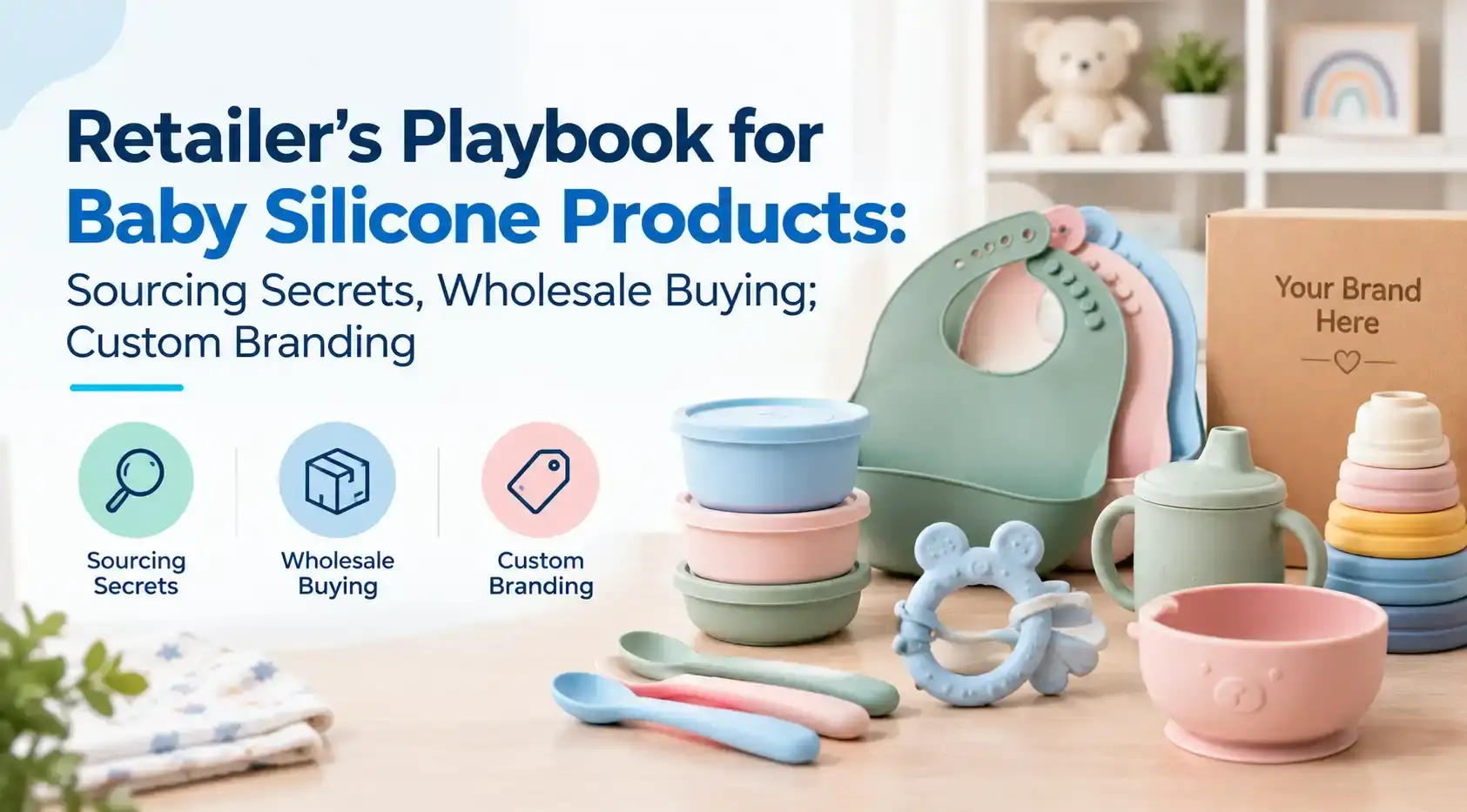
Parents today read labels, compare materials, and ask questions before they buy anything that touches their baby. This shift has pushed silicone to the top of the baby care category. Feeding sets, teethers, bibs, and tableware made from food-grade silicone are now common in online stores, boutique shops, and large retail chains. For retailers and distributors, this means steady demand and strong repeat purchases.
Three factors drive this growth. First, safety: parents want products that are BPA-free, non-toxic, and free from harmful fillers. Second, durability: silicone does not crack easily, survives dishwashers and sterilizers, and lasts through multiple children. Third, eco-friendly demand: buyers prefer reusable products over disposable plastic items, and silicone fits that preference well.
However, demand alone does not guarantee profit. The retailers who win are the ones who source carefully, check quality before they order, and build a product range that customers trust. This playbook walks you through the full process, from choosing products and finding suppliers to launching your own private label brand.
Before you contact any factory, you need to know which products to look for and what quality level to expect. For a full category breakdown, read our detailed resource: Baby Silicone Products Wholesale: A Complete Buyer's Guide for Retailers and Distributors
The baby silicone category is wide, but a few product groups consistently perform well in wholesale orders. Starting with these gives you a lower-risk catalog.
Baby products carry higher safety expectations than most other categories, so quality checks should never be skipped. Many factories describe their products as "food grade," but that claim should always be supported with documents. Here is a practical way to verify quality.
Finding a supplier is easy. Finding a reliable one takes a clear process. Our sourcing guide explains the full workflow in more detail: How to Source Baby Silicone Products: A Buyer's Guide for Retailers
A structured approach saves time and reduces the chance of costly mistakes. Follow these steps when you search for a new supplier.
Auditing helps you confirm that a supplier can deliver what it promises. If you cannot visit in person, you can arrange a video audit or hire a third-party inspection company. During the audit, look at the production area, raw material storage, cleanliness, and the quality inspection process. A clean and organized factory is often a good sign for baby product safety.
Sample testing should come before any bulk order. Check the sample for color accuracy, surface finish, edge smoothness, and overall strength. Wash it several times, expose it to hot water, and see whether it keeps its shape and color. If you plan to sell on large e-commerce platforms, consider sending the sample to an independent lab for additional testing.
Silicone products are lightweight but can take up space, so packaging design affects your shipping cost. Ask your supplier about carton size, units per carton, and how the products are protected during transport. Confirm the shipping terms in advance, such as FOB, CIF, or DDP, so you understand who pays for freight, insurance, and customs clearance. Always calculate your total landed cost, not just the factory price, before you decide on a retail price.
Selling generic products often means competing only on price. A private label brand gives you more control over quality, design, and margins. For a deeper look at this model, read Private Label Baby Silicone Products: What Retailers Need to Know
Most baby silicone factories offer several customization options, and you can choose the level that fits your budget.
Private label orders usually have higher MOQs than standard catalog items, because the factory needs to set up color mixing, printing, or molds for your brand. MOQ can vary by product type and level of customization. A simple logo on an existing design is often more flexible than a fully custom mold.
When you plan your budget, include these cost items:
Private label products typically give better margins than unbranded items, since you can price based on brand value instead of the lowest market price. Still, you should calculate your margin carefully after adding all costs, and then compare it with similar products in your target market.
Both sourcing ready-made products and building a private label brand can work well. The right choice depends on your budget, timeline, and long-term goals. The table below gives a quick side-by-side view.
| Factor | Sourcing Standard Products | Private Label Branding |
|---|---|---|
| Starting Budget | Lower | Higher, due to setup and packaging |
| MOQ | Usually lower and more flexible | Usually higher |
| Time to Market | Faster | Longer, because of design and approvals |
| Brand Control | Limited | Full control over design and image |
| Profit Margin | Moderate, with more price competition | Higher potential through brand value |
| Best For | New retailers testing the market | Established sellers building a long-term brand |
The baby silicone market offers real opportunity for retailers and distributors, but success depends on preparation. Choose products that match what parents want, verify safety standards before you buy, and build a supplier relationship based on clear communication and consistent quality. If you are ready to grow beyond generic products, private label branding can help you create a stronger identity and better margins.
Whether you are placing your first trial order or planning a full branded range, working with an experienced manufacturer makes the process smoother. A reliable partner can support product selection, custom designs, testing documents, and stable production for repeat orders.
Download our wholesale catalog or contact our team for a customized quotation, including private label options, MOQ details, and sample support.
Introduction: W
READ FULL

Have a question or need a quote? Fill out this form and our team will get back to you quickly!