


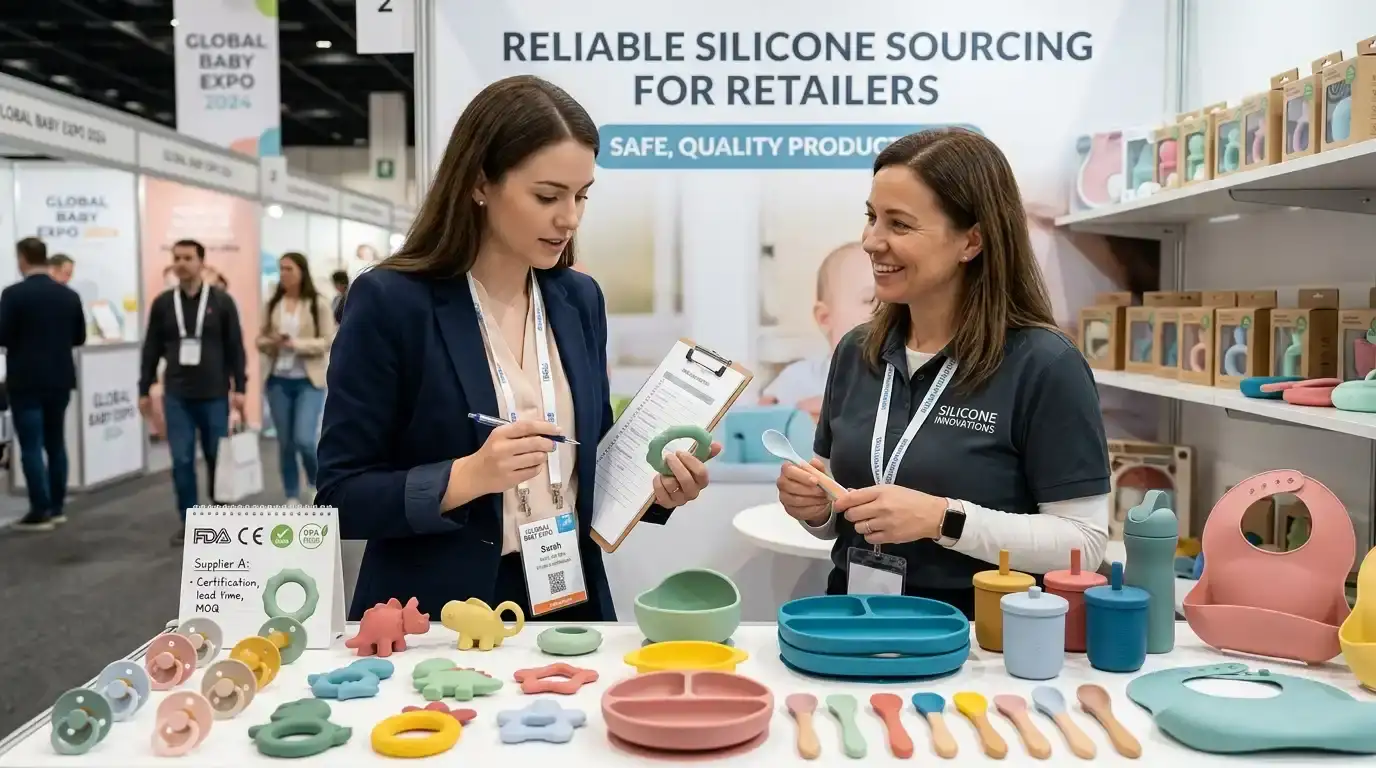
Baby silicone products have moved from a niche item to a core category for mainstream and specialty retailers. Parents now search for feeding sets, teethers, bibs, and sensory toys that are soft, durable, and easy to clean. For buyers, that demand creates real opportunity, but it also raises the stakes. A single failed test report or a batch made from poor material can trigger returns, marketplace delistings, or a costly recall that damages years of brand trust.
This guide walks retailers through the full sourcing process for baby silicone products, from choosing a product range to receiving a compliant, retail-ready shipment. You will learn how baby-grade silicone differs from cheaper alternatives, which safety standards apply in each major market, how to vet manufacturers, and how to calculate total landed cost. Each section is written for wholesale buyers, importers, and private label brands planning orders for 2026 and beyond.
Parents in 2026 are more ingredient-conscious than ever. They read labels, compare certifications, and prefer products that are BPA-free, phthalate-free, and built to last through several children. Silicone fits this mindset because it is soft on gums, heat resistant, and easy to sanitize. Eco-conscious shoppers also favor durable items over disposable plastics, which supports steady demand across online marketplaces, boutique stores, and baby specialty chains. Retailers that stock verified safe products often earn stronger reviews and repeat customers.
Read this blog: Baby Silicone Products Wholesale: A Complete Buyer's Guide for Retailers and Distributors
Most wholesale orders concentrate on a handful of proven categories. Feeding products lead the market because parents buy them early and replace them as children grow. Teethers and sensory toys sell well as gifts, while bibs and pacifier clips add low-cost items that raise basket value. A balanced starter range usually mixes two or three feeding items with one or two soft toys.
At Kaiweisilicone, Silicone baby products offer attractive margins because retail prices sit well above factory costs, especially for branded or gift-boxed sets. A feeding set that costs around 3 to 5 USD at factory level often retails between 14 and 25 USD, depending on market and packaging. Repeat orders are common because parents buy new sizes, colors, and replacements. Retailers who build a consistent range with one reliable supplier can also reduce reorder complexity and negotiate better pricing over time.
Not all silicone is equal. Food-grade silicone meets basic contact standards, but platinum-cured silicone uses a platinum catalyst and leaves fewer byproducts, which makes it the preferred choice for items that go into a baby's mouth. Liquid silicone rubber, often called LSR, is injection molded and offers excellent consistency, smooth surfaces, and fine detail. Peroxide-cured silicone is cheaper but can leave residues, so buyers should confirm the curing method in writing before approving any order.
Simple checks can reveal quality problems before lab results arrive. Pinch and twist the sample, because white streaks suggest fillers. Smell it after warming it in your hands, since a strong chemical odor signals poor curing. Rub the surface with a damp white cloth to check for color transfer, and boil a small piece to look for residue or deformation. These checks do not replace lab testing, but they help you eliminate weak suppliers quickly and cheaply.
Silicone competes with plastic, bamboo fiber, and wood in the baby category. Plastic is cheaper but raises chemical concerns, and bamboo fiber products often contain melamine binders that some markets restrict. Wood suits teethers but can crack and harbor bacteria. Silicone is flexible, dishwasher safe, and tolerates temperatures from roughly minus 40 to 220 degrees Celsius, which explains its popularity. Its main drawbacks are higher upfront mold costs and a tendency to attract lint, which good surface finishing can reduce.
In the United States, silicone articles used for repeated food contact fall under FDA 21 CFR 177.2600. Children's products must also meet CPSIA requirements, including limits on lead and phthalates, and many items are tested to ASTM F963 for toy safety. Importers must issue a Children's Product Certificate, or CPC, based on testing from a CPSC-accepted laboratory. Tracking labels showing batch and production details are also required, so confirm your supplier can print them on packaging.
The European Union has no single silicone-specific regulation, so buyers rely on Framework Regulation 1935/2004 and national rules. Germany's LFGB testing is widely accepted as a premium benchmark, and France has its own silicone requirements. Feeding and drinking products often reference EN 14350, while toys and teethers must satisfy the EN 71 series. CE marking applies to toys, and suppliers should provide a declaration of conformity. Always confirm which rules apply to your exact product type.
Each of these markets has its own rules. The UK follows UKCA and GB toy safety requirements after Brexit, so EU documents may not be enough. Canada regulates under the Canada Consumer Product Safety Act and sets strict limits for products such as pacifiers and teethers. Australia enforces mandatory standards on certain infant items, with oversight from the ACCC. Because requirements change, retailers should check official government sources and ask their supplier for market-specific test reports before placing an order.
A certificate is only useful if it is genuine and relevant. Ask for recent reports issued by respected laboratories such as SGS, Intertek, TUV, or Bureau Veritas, and check that the report names the exact product, material, and color. Request the report number and verify it on the laboratory's website. Reports older than one to two years, or those covering a different design, should not be accepted. Batch-level testing offers the strongest protection for retailers.
Rules continue to evolve in 2026. Regulators in several regions are tightening scrutiny of PFAS, chemical migration limits, and traceability for children's products. The EU has also been modernizing its toy safety framework, which raises documentation expectations. Retailers should ask suppliers whether their formulations and additives are free from restricted substances and whether they can provide complete material declarations. Because regulations change often, verify current requirements with official sources or a compliance consultant before finalizing any order.
Start by deciding what you want to sell and where. Define your product range, such as a feeding set plus a teether, and identify the markets where you will sell, since compliance depends on destination. Set a target retail price and work backward to determine the maximum landed cost. Consider your customers, whether they are budget shoppers or premium buyers. Clear specifications on size, color, packaging, and age grading will save time when you contact suppliers.
Build a shortlist of five to ten suppliers using several channels. B2B platforms like TradeWheel, Alibaba, and Made-in-China help you compare profiles quickly, while trade shows such as the Canton Fair and Kind + Jugend allow face-to-face evaluation. Direct outreach through a supplier's website often reveals better pricing. Send each supplier the same inquiry with your specifications so responses are comparable, and note how fast and how clearly they reply, which is an early sign of service quality.
Always order samples before committing to production. Request both a stock sample and a sample made with your intended material and color. Test them yourself for odor, finish, and fit, then send them to an independent laboratory for the standards your market requires. Pay for the samples, because free samples sometimes differ from mass production quality. Keep the approved sample sealed and signed, as it becomes your reference if quality disputes appear later in the order.
Negotiation covers more than unit price. Discuss MOQ, price breaks at higher quantities, payment terms, lead times, and who pays for testing. Most factories request a 30 percent deposit with the balance paid before shipment, though established relationships may allow better terms. Ask for a written quotation that lists material grade, packaging, and tolerances. Avoid paying the full amount upfront, and consider secure payment methods such as letters of credit or platform trade assurance protections.
Before mass production begins, approve a pre-production sample that matches the final material, color, logo, and packaging. Check Pantone color accuracy, embossing depth, seam quality, and any small parts. Review the packaging artwork for required warnings, age grading, and importer details. Sign off in writing and keep photos. This step is where most costly mistakes can still be corrected cheaply, so avoid rushing it even when production schedules feel tight.
During production, request progress photos and schedule an inspection when about 80 percent of goods are packed. Third-party inspectors can verify quantity, appearance, function, and carton markings against your approved sample. Once goods pass, confirm shipping terms, book freight, and prepare import documents. Track the shipment and plan warehouse space. Maintaining open communication with your supplier throughout this stage helps resolve small issues before they become delays or financial losses.
Many suppliers online are trading companies, which is not necessarily bad, but you should know who actually makes your product. Ask for the factory business license, address, and a live video tour. Check whether the company owns molding machines and employs engineers. Compare the business scope on the license with what they claim. Direct manufacturers typically offer better pricing and customization, while reputable traders can offer variety and smaller orders.
Evaluate the equipment and processes that shape quality. Look for in-house mold design and tooling, modern LSR injection or compression molding machines, a clean production area, and a dedicated quality control laboratory. Ask about monthly capacity, defect rates, and how they handle peak seasons. A factory that controls tooling and finishing in-house can fix problems faster and protect your designs. Request photos or videos of actual production lines, not only showroom images.
Certifications show that a supplier follows documented systems. ISO 9001 indicates quality management, BSCI or Sedex audits address social compliance, and GMP practices support hygiene. For the US market, check FDA facility registration where applicable. Always verify certificates through the issuing body, since forged documents exist. Look at expiry dates and scope. Certifications do not guarantee perfect products, but suppliers without them often lack the processes needed for consistent baby-grade output.
Some warning signs appear early in the conversation. Suppliers that avoid video calls, refuse independent testing, or quote prices far below the market often cut corners on materials. Vague answers about silicone grade or curing method deserve caution, and pressure to pay quickly is another serious risk. Reliable partners welcome scrutiny, answer technical questions clearly, and provide documents without delay. Trust your instincts, and walk away when answers do not match certificates or factory visits.
A written checklist keeps comparisons objective. Score each supplier from one to five on business license verification, factory capacity, material documentation, test reports, sample quality, communication speed, customization ability, and payment terms. Add notes from video calls and references. Suppliers scoring below your threshold, for example, under 30 out of 40, should be removed from the shortlist. Sharing the same scorecard with your purchasing team also keeps decisions consistent across multiple product categories and orders.
Customization is a major advantage of working with a factory. Common options include custom colors matched to Pantone codes, new shapes, embossed or debossed logos, different sizes, and branded packaging such as window boxes or gift sets. Private label buyers can also select textures and add features like suction bases. Keep designs practical and compliant, avoiding small detachable parts. Share clear drawings or reference samples so engineers can estimate feasibility and cost accurately.
Custom products require new molds, which are usually the highest upfront cost. Simple molds for items like teethers may cost around 500 to 1,500 USD, while complex multi-cavity tooling can exceed 3,000 USD. Mold making typically takes 15 to 30 days, followed by sample approval and revisions. Total development time from concept to mass production often reaches 45 to 75 days. Ask whether mold fees are refunded after reaching a specific order volume, as many factories offer that.
Protect your designs before sharing them. Sign an NDA, and clarify in the contract that you own the mold and any exclusive designs. Ask the factory to confirm in writing that your tooling will not be used for other customers. Registering trademarks and design patents in your target market provides additional protection. Store mold ownership documents and photos of the tooling with your purchasing records, which helps if disputes occur.
Several factors determine the price you receive. Material grade is the biggest factor, since platinum-cured silicone costs more than standard grades. Product weight, mold complexity, number of colors, and surface finishing also matter. Packaging can add 5 to 15 percent, particularly for gift boxes. Order quantity affects price as well, because larger runs spread setup costs. Compare quotations line by line so you understand what each supplier includes and excludes.
Minimum order quantities depend on whether you buy stock designs or custom items. Stock products often start at 100 to 500 pieces per item, while custom colors may require 1,000 pieces or more. Fully custom molds usually begin around 2,000 to 5,000 units per design. Some manufacturers accept mixed assortments to help new retailers test the market. Ask whether MOQ applies per item, per color, or per order, as this changes your inventory risk.
The factory price is only one part of your investment. Budget for laboratory testing, inspection fees, sample shipping, freight, import duties, customs brokerage, insurance, and local delivery. Add allowances for returns and marketplace fees if you sell online. Duties vary by country and product classification, so confirm your HS code with a broker. Ignoring these items can erase margins quickly, which is why experienced buyers always calculate landed cost before approving a purchase order.
The table below shows an illustrative landed cost for a silicone baby feeding set ordered in a quantity of 3,000 units. Figures are examples only and will vary by supplier, destination, and shipping method, but the structure shows how quickly costs accumulate beyond the factory price. Notice that the factory price represents roughly three-quarters of the total. Use the table as a template and replace the numbers with real quotations when you compare suppliers.
|
Cost Item |
Per Unit (USD) |
Share of Total |
Notes |
|
Factory price (FOB) |
3.20 |
75.1% |
Platinum-cured silicone, custom color |
|
Retail packaging |
0.35 |
8.2% |
Window box with insert card |
|
Laboratory testing |
0.10 |
2.4% |
Spread across the full order |
|
Third-party inspection |
0.06 |
1.4% |
AQL pre-shipment check |
|
Sea freight |
0.28 |
6.6% |
LCL shipment to destination port |
|
Import duty |
0.12 |
2.8% |
Depends on HS code and country |
|
Brokerage and local delivery |
0.15 |
3.5% |
Customs clearance and trucking |
|
Total landed cost |
4.26 |
100% |
Before marketplace or retail fees |
Quality control should happen at several stages. Incoming material checks confirm silicone grade, in-process checks catch defects early, and a final inspection verifies the finished batch. Most buyers use AQL standards, commonly 2.5 for major defects and 4.0 for minor defects under general inspection level II, though baby products often justify stricter limits. Hire an independent inspection company if you cannot visit the factory, and share your approved sample and checklist beforehand.
Baby silicone products have predictable weak points that inspectors should check carefully. Defects affect safety as well as appearance, so none should be treated as purely cosmetic when they involve small parts or sharp edges. Provide inspectors with reference photos showing acceptable and unacceptable examples so decisions remain consistent. Clear classification into critical, major, and minor defects also prevents disputes with the factory after inspection. Review inspection reports together with the supplier and request corrective actions in writing.
Create a simple testing calendar. Test every new product and material before the first order, retest whenever the formulation or supplier changes, and conduct periodic checks on production batches, such as every six to twelve months or with each large order. Pay attention to heavy metals, migration, phthalates, and small parts and pull tests. Keep all reports in an organized file for at least five years, since regulators and marketplaces may request them.
Packaging protects products and helps them sell. Use clean, food-safe packaging such as polybags, window boxes, or recyclable cartons with clear product details. Include age grading, material information, care instructions, batch number, and importer or brand contact details. Barcodes and marketplace labels such as FNSKU should be applied at the factory to save time. Avoid inks or adhesives that could contact the product surface, and always approve a final packaging sample first.
Many markets require specific warnings for products meant for children under three. In the United States, small parts warnings and tracking labels are mandatory where applicable, and the EU expects CE marking with clear safety information. Teethers and pacifier clips often need additional markings and instructions. Confirm requirements for each destination before artwork is finalized, because wrong labels can cause customs delays or forced relabeling at your own cost. Your supplier should review the artwork too.
Choose shipping terms that match your experience. FOB means the factory delivers goods to the port and you manage freight, which gives control and transparency. EXW places even more responsibility on you, while DDP simplifies the process but usually costs more. Lead times for ready stock may be 7 to 15 days, while custom orders often need 30 to 45 days plus 20 to 35 days of sea freight. Air freight suits urgent or small replenishments.
Even experienced retailers repeat avoidable errors when sourcing baby products. Most problems come from rushing decisions or trusting documents without verification. Learning from these mistakes can save thousands of dollars and protect your reputation with customers and marketplaces. The following points summarize the issues that appear most frequently in sourcing projects and the simple actions that prevent them. Review them before every new purchase order, especially when you add a new supplier or product line.
Working directly with a dedicated silicone baby products manufacturer improves consistency and control. You communicate with the people who make the product, which shortens approval cycles and reduces misunderstandings. Factories with in-house tooling can adjust designs quickly and offer better prices than intermediaries. Direct partnerships also make traceability easier, since the supplier can link each batch to material records and test reports. Over time, this relationship supports stable quality and smoother reorders.
Partnering with Kaiweisilicone means working with a manufacturer focused on safe, compliant baby silicone products. Buyers can expect food-grade, platinum-cured materials, OEM and ODM support, documented test reports, and clear communication from inquiry to shipment. Typical MOQs, lead times, and certifications should be confirmed during quotation, and samples are available for evaluation. To begin, send your product requirements and target market, and the team will prepare a tailored proposal.
Platinum-cured, food-grade silicone is generally considered the safest choice for baby products because it uses a platinum catalyst that leaves minimal byproducts. It should be free from fillers, BPA, phthalates, and heavy metals, and be tested to the standards of your market, such as FDA, LFGB, or EN rules. Always request a recent third-party test report that matches the exact product and color you plan to buy. A supplier who explains the curing process clearly is usually a better partner.
A reliable supplier should hold ISO 9001 for quality management and, ideally, BSCI or Sedex for social compliance. Product-level reports matter even more, including FDA, LFGB, CPSIA, EN 71, or ASTM F963 depending on your market. Look for tests from SGS, Intertek, TUV, or Bureau Veritas. Verify every certificate with the issuer, check validity dates, and confirm the scope covers the product you intend to order. Certifications support trust, but samples and inspections confirm it.
MOQ varies by product type. Stock items such as bibs or teethers often start at 100 to 500 pieces per design, while custom colors may require 1,000 pieces or more. Fully custom molded products usually begin at 2,000 to 5,000 units. Many factories accept mixed assortments or lower quantities for first trial orders, usually at a slightly higher unit price, so it is worth asking before assuming the stated minimum applies to your order.
Custom production usually takes between 45 and 75 days from design approval to shipment readiness. Mold making takes roughly 15 to 30 days, sample approval requires one to two weeks, and mass production often needs 15 to 25 days depending on quantity. Add sea freight time of 20 to 35 days. Stock products can ship in 7 to 15 days. Plan early for peak seasons, including holidays and Lunar New Year closures.
Start by checking the report number on the issuing laboratory's official verification page, which most major laboratories provide. Confirm that the product name, material, color, test date, and standards match your order. Be cautious of edited PDFs, missing report numbers, or reports from unknown laboratories. For the strongest protection, order your own tests from an accredited laboratory using random samples from the supplier's production batch. This removes any doubt about authenticity.
Yes, many manufacturers allow mixed assortments for first orders, which helps retailers test demand without carrying large stock of a single item. Expect slightly higher unit prices and possibly a minimum total order value. Colors and sizes may need to be limited to keep production efficient. Confirm packaging requirements for each product, and request a combined quotation so you can compare costs clearly across items. Ask for a combined test plan too.
Sourcing baby silicone products successfully comes down to a disciplined process. Define your range and market, understand the materials, confirm compliance, verify the supplier, test samples, approve production samples, and inspect each shipment. Do not rely on price alone, and always calculate landed cost. Compliance priorities such as certified materials, batch testing, and correct labeling should remain at the top of your list. Retailers who follow these steps reduce risk and build strong supplier relationships for 2026 and beyond.
Ready to start sourcing? Contact Kaiweisilicone to request a quotation, a sample kit, or the latest product catalog. Share your target market, product list, and preferred quantities, and our team will respond with pricing, lead times, and compliance documents. Whether you are launching a new baby brand or expanding an existing range, early conversations about specifications and testing help avoid delays and create a smoother path from first sample to repeat orders.
Introduction: W
READ FULL

Have a question or need a quote? Fill out this form and our team will get back to you quickly!